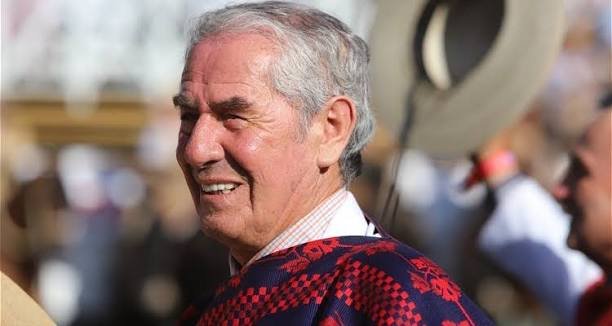
Eduardo Tamayo is best known publicly as the first husband of Tulsi Gabbard, the American politician and military veteran from Hawaii. Their marriage began when Gabbard was entering public life and ended after her deployment to Iraq. Beyond that relationship, however, Tamayo has remained an intensely private person.
That lack of public information has created an unusual online problem. Numerous biography websites present detailed claims about his age, career, family background, current location, and wealth, yet much of this material cannot be traced to dependable records or direct statements. A careful account therefore has to separate a small number of established facts from the speculation that has accumulated around his name.
What Is Publicly Known About Eduardo Tamayo
Tamayo and Gabbard reportedly knew each other long before they became husband and wife. In a profile published years after their divorce, Gabbard described him as a childhood sweetheart and close friend. She also indicated that their families shared a strong connection.
The couple married in 2002, when Gabbard was 21. It was a significant period in her life because she was also beginning her political career. That year, she won a seat in the Hawaii House of Representatives, becoming one of the youngest people elected to a state legislature in the United States at the time.
As Gabbard moved into public office, Tamayo’s name occasionally appeared through her use of the married name Tulsi Gabbard Tamayo. This did not make him a political figure in his own right. Available coverage does not show that he held an official government position, managed her public career, or actively sought media attention.
The contrast between them became increasingly noticeable. Gabbard’s work placed her before voters, journalists, and political organizations, while Tamayo remained almost entirely outside the public record. That pattern continued after their marriage ended.
A Young Marriage at the Start of a Public Career
The marriage began during a period of rapid change. Gabbard was not only adjusting to married life but also taking on the responsibilities and scrutiny that came with elected office. Soon afterward, another major commitment entered the picture.
She enlisted in the Hawaii Army National Guard in 2003. When her unit was called to serve in Iraq, she volunteered for the deployment even though she was serving in the state legislature. She did not campaign for another legislative term while preparing for military service.
Gabbard deployed to Iraq in 2004 and served with a medical unit. Her work took her away from Hawaii and placed her in a demanding military environment. The separation also meant that her marriage had to endure the strain familiar to many military households: extended time apart, limited communication, uncertainty, and the difficulty of readjusting after a service member returns home.
It would be too simplistic to claim that one event alone caused the divorce. Neither party has released a detailed public account of their private disagreements. Gabbard did, however, directly connect the breakdown of the relationship to the wider pressures that war and deployment can place on military couples.
The marriage legally ended in 2006, not long after her return from Iraq.
The Role of Military Deployment in Their Divorce
Most public understanding of the separation comes from Gabbard’s own comments. She described herself and “Eddie” as another example of a marriage damaged by the stresses of war on service members and their families.
Her wording matters because it did not publicly accuse Tamayo of misconduct. Nor did she portray the divorce as a sensational personal conflict. Instead, she placed their experience within the broader reality faced by military families.
A deployment affects both partners, although in different ways. The deployed service member lives under military discipline and may face danger, exhaustion, and traumatic circumstances. The spouse at home must manage ordinary life through prolonged absence while dealing with concern for the other person’s safety. When the service member returns, both partners may have changed, and routines developed during the separation must be renegotiated.
None of this proves precisely what happened inside their marriage. It does, however, provide the context Gabbard herself chose to share. Claims that Tamayo simply objected to her career, abandoned her, or demanded the divorce go beyond the reliable public evidence.
There is also no responsible basis for assigning blame. Only the former couple would know the full story, and Tamayo does not appear to have offered his version publicly.
Why Gabbard Continued Using the Tamayo Name
One of the more revealing details emerged several years after the divorce. Gabbard continued using the surname Tamayo in public and political settings, including during her campaign for the Honolulu City Council.
In 2011, she announced that she would return to using Tulsi Gabbard. In explaining the decision, she said she had kept the married name because she hoped that she and her former husband might eventually have a future together. By that point, she had accepted that reconciliation was not going to happen.
This detail suggests that the emotional end of the relationship was more gradual than the legal timeline alone might imply. The divorce was finalized in 2006, but her decision to retain the surname reflected a lingering personal attachment.
It also explains why older political materials may refer to “Tulsi Gabbard Tamayo.” Readers sometimes assume that these materials indicate the couple remained married beyond 2006. They do not. They merely reflect Gabbard’s continued use of her former married name.
What Is Not Reliably Known
Although online profiles often describe Eduardo Tamayo as a businessman, dependable information about his occupation is scarce. There is no widely available professional biography, verified company profile, or substantial interview in which he explains his work.
The same caution applies to claims about his net worth. Some websites attach specific figures to his name, occasionally describing him as a millionaire. These estimates generally appear without financial records, documented business holdings, or a credible explanation of how the amount was calculated. They should not be treated as established facts.
Other uncertain details include:
- His exact date of birth and age
- His education and professional qualifications
- His present occupation or business interests
- His current place of residence
- Whether he remarried after the divorce
- Details about his parents or extended family
- Any personal social-media accounts
Some reports also make assertions about his ethnicity or family origins. A surname or unverified biography is not enough to establish someone’s heritage, nationality, or cultural identity. Without direct confirmation, such claims should be described as unknown.
There is no credible public evidence that Tamayo has tried to build a career from his past connection to Gabbard. He has not become a regular television guest, political commentator, or public critic of his former wife. His absence from the media appears consistent rather than temporary.
How Online Profiles Turn Missing Information Into “Facts”
The amount of uncertain material surrounding Tamayo illustrates a common problem with biographies of private people linked to celebrities or politicians. One website publishes an unsupported detail, another repeats it, and several more rewrite it. Repetition then creates the appearance of confirmation even though every version may originate from the same unverified claim.
Net-worth estimates are a particularly clear example. A precise dollar amount can make an article appear authoritative, but precision is not evidence. Unless an estimate is connected to disclosed assets, court records, a documented company, or a reliable financial investigation, it is little more than a guess.
Photographs can cause similar confusion. Images labeled with his name may show someone else entirely, especially when they circulate without an original caption or identifiable source. Because Tamayo has rarely appeared in established media coverage, readers should be cautious about assuming that every online image represents him.
The most dependable parts of his story are the facts connected to public records and Gabbard’s direct remarks: the marriage, its duration, her military deployment, the divorce, and her later decision to stop using the married surname.
Life After the Marriage
Following the divorce, Tamayo largely disappeared from public discussion. There is little reliable reporting about his personal or professional life afterward. Privacy in this case should not be mistaken for mystery, scandal, or evidence that information is being concealed. It may simply reflect a decision to live outside public attention.
Gabbard’s life followed a different course. She continued her military service, returned to elected politics, served on the Honolulu City Council, and later represented Hawaii in the U.S. House of Representatives. In 2015, she married cinematographer Abraham Williams.
Williams and Tamayo are sometimes confused in poorly edited online profiles, but they are two different people. Tamayo was Gabbard’s first husband, while Williams became her second husband years after the divorce.
No reliable public account indicates that Tamayo played a role in Gabbard’s later campaigns or national political career. His relevance to her biography is concentrated in her early adulthood, first years in politics, and wartime service.
A Private Person in a Public Story
Eduardo Tamayo occupies a small but personally important place in Tulsi Gabbard’s life story. They were childhood sweethearts who married young, faced an extended military separation, and divorced after several years together. Gabbard’s later comments suggest that the experience remained emotionally significant and influenced how she understood the pressures placed on military families.
Beyond those points, the responsible conclusion is that much of his life remains private. His career, finances, family circumstances, and present activities have not been reliably documented. Respecting that boundary produces a shorter factual record, but it is more accurate than filling the gaps with recycled online speculation.
Frequently Asked Questions
Who is Eduardo Tamayo?
He is the first husband of Tulsi Gabbard. The two reportedly knew each other from childhood and were married from 2002 until their divorce in 2006.
Why did he and Tulsi Gabbard divorce?
Gabbard connected the breakup to the pressures that war and military deployment can place on service members, spouses, and families. Neither former partner has published a detailed account of their private marital difficulties.
Is he a businessman?
Several online profiles describe him that way, but detailed and independently verified information about his profession is limited. Specific claims about his companies or business activities should therefore be treated cautiously.
What is his net worth?
There is no credible public financial information establishing his net worth. Figures circulated by entertainment and biography websites appear to be unsupported estimates.
Where is he now?
His present location, occupation, and relationship status have not been reliably confirmed. He has maintained a private life and does not appear to seek public attention.
