Searching for the best piononos de Santa Fe near me usually means one of two things. You may be in Granada and want to taste the pastry close to its birthplace, or you may be elsewhere and hope to find a bakery selling a convincing version of the original. Either way, freshness matters as much as reputation.
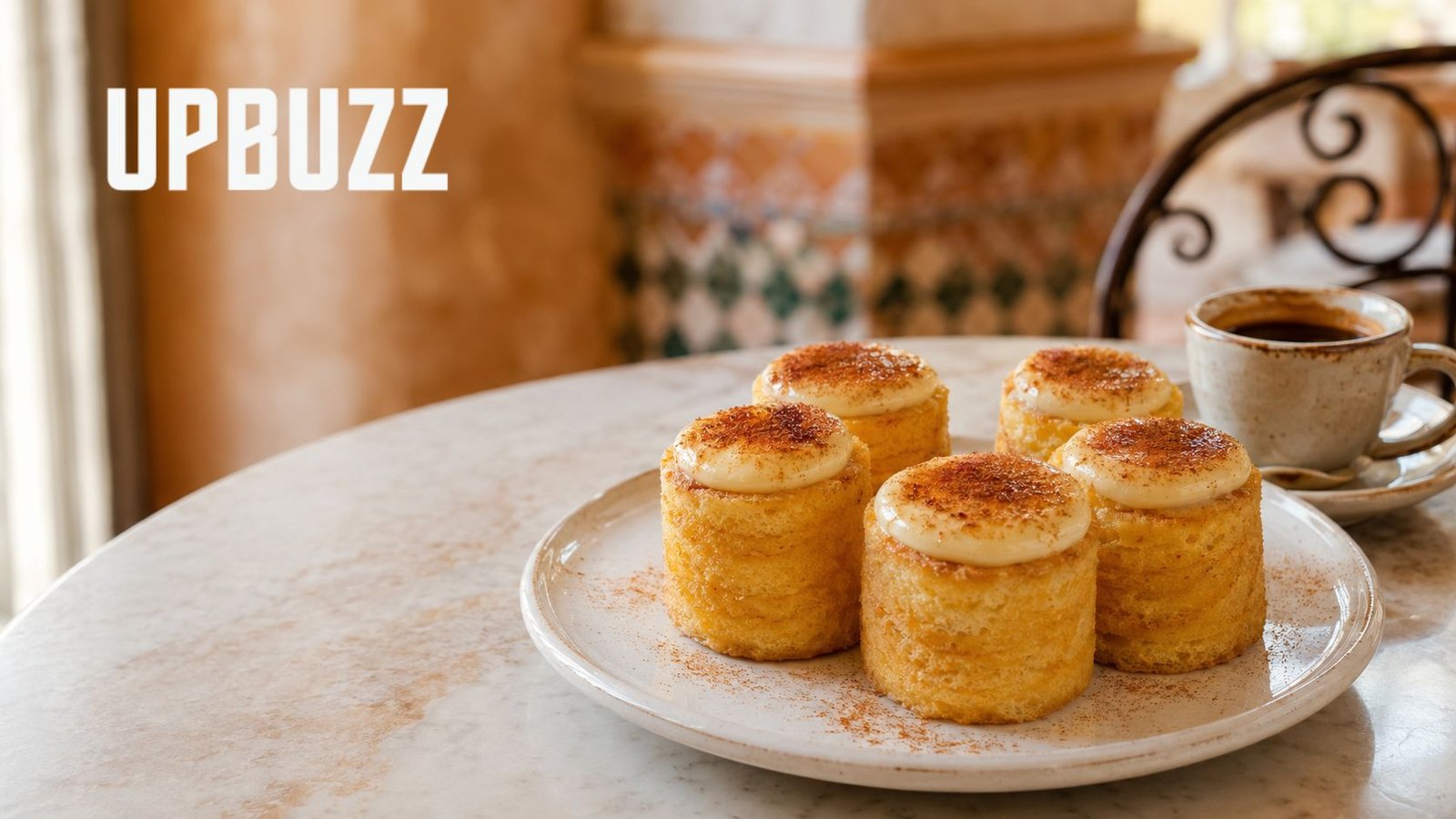
The traditional pionono from Santa Fe is a small, syrup-soaked sponge roll topped with pastry cream and finished with a lightly caramelized crown. It is soft, moist and intensely sweet, with cinnamon adding warmth rather than dominating the flavor. Although the cake looks simple, a good one depends on careful proportions. Too much syrup makes it soggy; too little leaves the sponge dry. A heavy topping can overwhelm the delicate roll, while a pale, untoasted finish misses part of the pastry’s character.
For the most authentic experience, Santa Fe—the town just west of Granada—is the natural place to begin. Several local bakeries make piononos, and the municipal tourism office identifies a number of established producers. Granada city also has reliable options, particularly branches and stockists supplied by Santa Fe bakeries.
What is a true Pionono de Santa Fe?
The name “pionono” is used for different foods around the world. In several Latin American countries, it can refer to a larger rolled sponge cake with sweet or savory fillings. In the Philippines, the related pianono is generally a soft Swiss-roll-style cake. Those versions have their own traditions, but they are not the same as the small pastry associated with Santa Fe in Granada.
A classic Pionono de Santa Fe has three recognizable elements:
- A thin sheet of tender sponge cake, rolled into a compact cylinder
- Syrup, traditionally flavored with cinnamon, that moistens the sponge
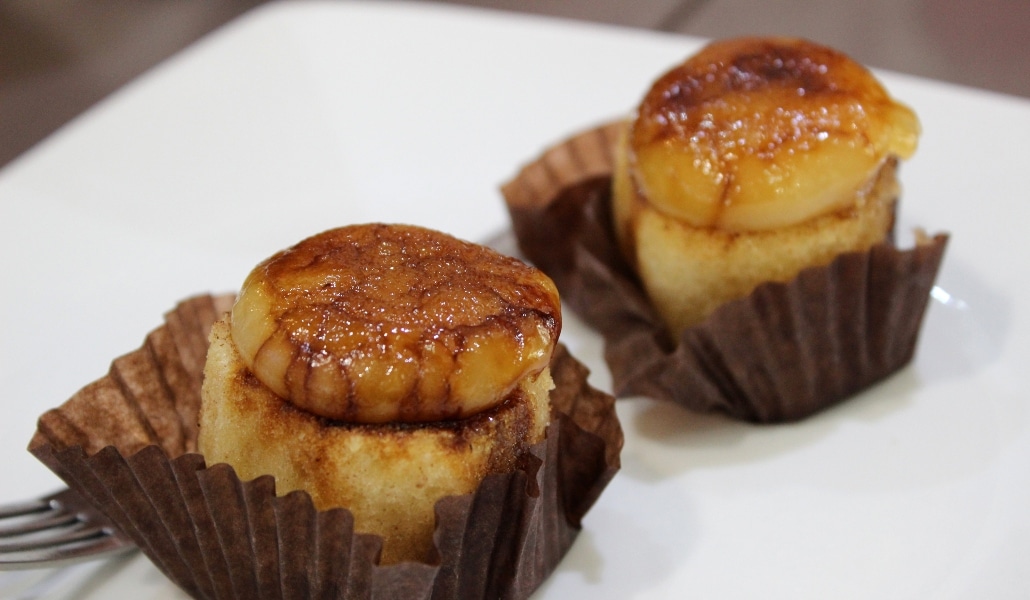
- A cap of smooth cream with a caramelized or toasted surface
It should normally be small enough to eat in two or three bites. The sponge must remain identifiable beneath the syrup, and the roll should hold its shape when lifted. The ideal texture lies somewhere between cake and custard-soaked pastry: moist without collapsing, creamy without becoming heavy.
The toasted top is more than decoration. Its faint bitterness balances the sugar and gives the pastry a more complete flavor. If the top tastes only of cold custard or appears untouched by heat, the pionono may still be pleasant, but it will lack the contrast found in a well-finished traditional example.
A short history, with room for uncertainty
Santa Fe’s official tourism information attributes the modern pionono to confectioner Ceferino Isla González in 1897. According to the widely accepted account, Isla created the pastry as a tribute to Pope Pius IX, whose Italian name, Pio Nono, supplied the name. The cylindrical body and cream-covered crown are often said to evoke the pope’s appearance.
Casa Ysla, the business associated with Ceferino Isla, continues to present itself as the home of the original Pionono de Santa Fe. Its pastries are still made in Santa Fe and sold through several locations.
There are competing theories about the dessert’s deeper ancestry. Some writers point to Andalusi baking traditions because of the pastry’s use of syrup and cinnamon. Other accounts suggest that similar sweets may have existed before 1897. These possibilities are interesting, but the evidence is not conclusive enough to state that the modern pionono came directly from one particular medieval recipe.
The safest distinction is that syrup-soaked cakes have a long history in the region, while the recognizable commercial Pionono de Santa Fe is generally connected with Ceferino Isla and the end of the nineteenth century.
Best piononos de Santa Fe near me: the strongest places to start
There is no objective ranking that can identify one bakery as the best for every customer. Sweetness, cream texture and degree of caramelization are matters of taste. Opening hours, stock and branch details also change, so they should be checked directly before a special journey.
However, a few Santa Fe establishments stand out because they are documented by the town’s tourism service and have a clear connection to local pastry making.
Casa Ysla
Casa Ysla is the essential first stop for anyone who wants the historically recognized version. The company traces its tradition to 1897 and says its piononos are produced daily at its Santa Fe workshop using an artisanal process.
In Santa Fe, the traditional town-centre shop on Calle Real is convenient for visitors exploring the historic area. The company also operates a larger establishment on the road between Santa Fe and Granada. Additional Casa Ysla locations in Granada make the original-style pastry easier to find without travelling to the town itself.
Why start here? Not because every customer must declare it the only acceptable pionono, but because it provides a useful benchmark. Once you understand the balance of sponge, syrup, cinnamon, cream and toasted sugar in the best-known version, comparisons with other bakeries become more meaningful.
Obrador Rey Fernando
Rey Fernando is another established Santa Fe producer listed by the local tourism office. It has operated a workshop in Plaza de San Agustín and a confectionery on Calle Real, placing it within easy reach of visitors making a dedicated pastry stop in the centre.
This is a sensible choice for comparison tasting. Trying piononos from two nearby bakeries reveals how much variation can exist within the same basic formula. One producer may use a softer sponge, another a more pronounced cinnamon syrup, and another a darker caramelized finish.
Current product selection and availability cannot be guaranteed without contacting the bakery. Piononos are popular and are best bought when recently made, so an early visit may provide a better selection.
Obrador Robles and Confitería Arco de Belén
Obrador Robles is also included in Santa Fe’s official list of artisan pastry producers. Its associated Confitería Arco de Belén offers another local option for visitors who want to move beyond the most famous name.
Smaller or less internationally known bakeries can be particularly rewarding because they show that the pionono is part of Santa Fe’s living food culture, not simply a branded souvenir. That said, public information about recipes and daily stock may be limited. Ask whether the piononos were made that day and whether refrigeration is recommended before taking a box on a journey.
Puerta Bernina
Puerta Bernina is another producer recognized in the municipality’s directory of Santa Fe pastry workshops. It may suit buyers looking for local production or larger orders, although retail arrangements should be confirmed beforehand.
A workshop is not always the same as a walk-in café. Before travelling, check whether direct public sales are available, where the nearest retail point is located and whether advance ordering is necessary.
How to judge a pionono before buying a whole box
If you have several bakeries nearby, buy one or two individual pastries before committing to a dozen. A tasting box from different producers can be more informative—and more enjoyable—than relying on ratings alone.
Start with appearance. The pionono should be compact and upright, with a visible spiral in the sponge. A little syrup around the base is not necessarily a problem, but the cake should not sit in a puddle. The cream crown should look smooth and freshly caramelized rather than dry or crusted from prolonged storage.
Next, pay attention to temperature. Piononos are often kept chilled because of the cream, but excessive cold suppresses flavor and makes the sponge seem firmer. Follow the bakery’s storage guidance, then allow the pastry a short time to lose its refrigerator chill if advised.
In the first bite, look for balance. You should taste egg-rich sponge, syrup, cinnamon, cream and toasted sugar as connected layers. Warning signs include gritty cream, a harsh burnt topping, a rubbery roll or so much syrup that the sponge has lost its structure.
Sweetness is unavoidable; this is not a restrained dessert. Nevertheless, a properly made pionono should offer enough cinnamon and caramelization to prevent the sugar from becoming flat.
Finding a good version outside Granada
When a map search for best piononos de Santa Fe near me produces results far from Andalusia, verify exactly what each bakery sells. A listing that simply says “pionono” may refer to a large filled roll, a savory dish or a Latin American variation.
Useful search phrases include “Pionono de Santa Fe,” “Granada-style pionono” and “Spanish pionono with toasted cream.” Photographs can help: look for small upright cylinders with a cream crown, not long slices cut from a Swiss roll.
Ask the bakery four direct questions:
- Is this the Santa Fe or Granada style?
- Is the sponge soaked in syrup?
- Does it have a toasted cream topping?
- When were the pastries made?
Imported or shipped piononos can be worthwhile, but they inevitably face a freshness disadvantage. Confirm delivery times, packaging and refrigeration requirements. Avoid leaving a box in a warm car, especially during summer.
Buying, serving and carrying them home
Piononos are fragile. Keep the box level and do not stack luggage on top of it. For a long trip, ask the seller how long the pastries can remain unrefrigerated and whether an insulated bag is appropriate. Food-safety guidance from the producer should take priority over general advice.
Serve them as individual pastries rather than cutting them unless you are sharing a tasting portion. Coffee is the obvious companion because its bitterness offsets the syrup. Unsweetened tea also works well. A single pionono may look modest, but the combination of syrup and cream makes it richer than its size suggests.
If you are comparing bakeries, taste the traditional version first. Chocolate, citrus, ice-cream and cake-sized adaptations can be enjoyable, but they are less useful when judging the character of the original.
Conclusion
The most dependable answer to best piononos de Santa Fe near me is to begin in Santa Fe itself. Casa Ysla offers the historical reference point, while Rey Fernando, Robles, Arco de Belén and Puerta Bernina provide opportunities to explore how local bakers interpret the town’s signature pastry. In Granada city, established Santa Fe producers and their retail branches are the next-best choice.
Wherever you buy one, prioritize freshness, confirm that it is genuinely the Santa Fe style and judge the balance rather than the size. The finest pionono is moist but stable, richly sweet but tempered by cinnamon and toasted sugar, and small enough to leave you considering a second.
Frequently asked questions
Are Piononos de Santa Fe the same as Swiss rolls?
No. They use rolled sponge, but the Santa Fe pastry is much smaller, soaked in syrup and topped with toasted cream.
Where did Piononos de Santa Fe originate?
The modern pastry is generally traced to Santa Fe, Granada, and confectioner Ceferino Isla González in 1897.
Do piononos need refrigeration?
They commonly contain pastry cream, so refrigeration may be necessary. Follow the seller’s storage and food-safety instructions.
Can I buy authentic piononos in Granada city?
Yes. Santa Fe producers, particularly Casa Ysla, have sold piononos through locations in Granada. Check current branch details and stock before visiting.
How long do piononos stay fresh?
They are best eaten as fresh as possible. The exact storage period depends on the recipe, packaging and temperature, so ask the bakery rather than relying on a universal estimate.